


The Tesco equal pay appeal ruling has become one of the most closely watched employment law developments in the UK retail sector.
On 12 May 2026, the Court of Appeal rejected Tesco’s challenge over how employment tribunals assess the roles of shop workers and warehouse staff in the supermarket’s long-running equal pay dispute.
The decision keeps the legal battle moving forward and could influence future wage claims across the retail industry.
Key highlights:
- Tesco lost its Court of Appeal challenge over job assessment methods
- Tribunals can rely on Tesco’s own training materials and operational documents
- The ruling may influence future equal pay claims across UK retail
- More than 16,000 Tesco workers are involved in the litigation
- The wider legal battle over equal pay compensation continues
The judgment is widely viewed as a major procedural victory for claimants and could reshape how large-scale equal pay cases are handled in the future.
What Is the Tesco Equal Pay Appeal Ruling and Why Is It Making Headlines?

The Tesco equal pay appeal ruling focuses on whether store workers perform work of equal value to higher-paid warehouse employees. Most claimants are female shop workers, while many distribution roles are held by men.
The Court of Appeal upheld an earlier Employment Tribunal approach that used Tesco’s training manuals and operational guidance to assess job requirements. Tesco argued that tribunals should focus more on what workers actually did in practice.
The ruling is making headlines because it could influence large-scale equal pay claims, retail pay structures and wider debates around gender equality in employment.
“This judgment reinforces the principle that standardised operational systems can become central evidence in equal pay litigation,” said employment law specialist Rebecca Holmes.
The case remains ongoing, but the latest decision has strengthened the position of claimants moving into the next stage of the litigation.
Why Did the Court Reject Tesco’s Appeal Against the Employment Tribunal?
The Court of Appeal concluded that the Employment Tribunal had acted lawfully when using Tesco’s internal documents to assess job roles.
Judges accepted that Tesco operates within a highly regulated environment and requires consistency across stores and distribution centres.
Tesco’s Argument Over Job Assessment Methods
Tesco argued that relying too heavily on training documents created an inaccurate picture of real working conditions.
The company maintained that tribunals should examine individual evidence from employees rather than standardised materials.
Why Training Materials Became Key Legal Evidence?
The court found Tesco’s training manuals were not simply aspirational guides. Instead, they were detailed operational instructions explaining how work should be performed across the business.
Key reasons the court accepted the documents as evidence included:
- Tesco’s need for operational consistency
- Detailed digital stock and compliance systems
- Strict procedures in regulated retail environments
- Standardised responsibilities across stores
The judges stated that such documentation could be treated as reliable evidence unless strong contradictory evidence existed. This finding may now shape how future tribunals assess equal value claims involving large employers.
How the Court of Appeal Responded to Tesco’s Challenge?
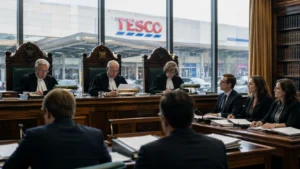
The court dismissed most of Tesco’s grounds of appeal and allowed the tribunal process to continue without restarting the entire equal value assessment exercise.
Table: Court of Appeal Findings:
| Legal Issue | Tesco’s Position | Court Decision |
| Use of training documents | Should not define job roles | Can be treated as evidence |
| Equal value assessment | Wanted more individual analysis | Tribunal approach upheld |
| Witness evidence | Preferred employee-specific evidence | Generic assessments allowed in some cases |
| Tribunal process | Sought partial rehearing | Appeal largely dismissed |
The judgment effectively keeps the equal pay litigation moving forward rather than delaying proceedings further.
How Does the Tesco Equal Pay Case Compare Store Workers and Warehouse Staff?
At the centre of the dispute is the comparison between Tesco customer assistants and distribution centre workers. Claimants argue that although the roles differ, they provide equal value to the business and should therefore receive equal pay under the Equality Act 2010.
Store workers often carry out physically demanding tasks, customer service duties, stock handling and compliance responsibilities. Distribution workers, meanwhile, typically receive higher pay due to market-driven wage structures in logistics and warehousing.
Comparison Between Tesco Roles:
| Store Worker Responsibilities | Warehouse Worker Responsibilities |
| Customer service | Goods distribution |
| Shelf replenishment | Loading and unloading |
| Stock monitoring | Logistics operations |
| Food safety compliance | Warehouse handling systems |
| Checkout operations | Inventory processing |
The legal question is not whether the jobs are identical, but whether they hold equal overall value when measured against skill, effort and responsibility.
What Does the Ruling Mean for Equal Pay Claims Across the UK Retail Sector?

The Tesco equal pay appeal ruling may have consequences far beyond Tesco itself. Similar claims have already emerged against retailers including Asda, Morrisons, Sainsbury’s and Next.
Many employment lawyers believe the judgment will encourage future claimants because it reduces procedural barriers in mass litigation. Tribunals may now feel more confident using generic assessments where employers operate standardised systems.
“Retailers with heavily structured operational models may now face greater scrutiny over pay consistency and role valuation,” noted HR consultant Daniel Mercer.
The ruling also highlights the growing importance of transparency in job design, training and wage structures across large organisations.
Could Tesco Still Defend the Pay Difference Between Shop and Distribution Workers?
Although Tesco lost this appeal, the company still has opportunities to defend the pay gap during ongoing Employment Tribunal proceedings. Tesco continues to rely on the argument that warehouse roles attract higher wages due to market conditions and recruitment pressures.
Lawyers representing claimants argue that “market rates” alone should not justify differences in pay between predominantly male and predominantly female workforces.
Important unresolved questions include:
- Whether store and warehouse roles are truly of equal value
- Whether Tesco can rely on a lawful material factor defence
- Whether compensation or back pay could eventually be awarded
The final liability decision may not arrive until later in 2026 or beyond, depending on further hearings and appeals.
How Might the Tesco Equal Pay Appeal Ruling Affect Employers and HR Policies?

The decision is likely to influence how employers manage internal documentation, job structures and equal pay risks.
Why Businesses May Need to Review Internal Documentation?
The ruling confirms that training manuals, operational guidance and digital systems may become evidence in future litigation. Businesses may therefore need to ensure internal documents accurately reflect real working practices.
The Growing Importance of Consistent Job Structures
Employers with standardised job models could face greater scrutiny if pay differences exist between comparable roles.
Areas businesses may review include:
- Job descriptions
- Training programmes
- Pay benchmarking
- Equality audits
- Workforce gender balance
Lessons for UK Employers Facing Equal Pay Risks
Employer Takeaways From the Tesco Ruling:
| Business Area | Potential Impact |
| HR documentation | Greater legal scrutiny |
| Pay structures | Increased equal pay reviews |
| Training systems | Documents may become evidence |
| Recruitment policies | More focus on pay transparency |
| Tribunal strategy | Reduced reliance on procedural delays |
The case serves as a warning that operational consistency can strengthen both business efficiency and claimant arguments in equal pay disputes.
What Happens Next in the Tesco Equal Pay Litigation Process?
The latest ruling does not conclude the Tesco equal pay case. Instead, it clears the way for the underlying equal value and pay justification issues to continue before the Employment Tribunal.
The tribunal must still decide:
- Whether store worker roles are genuinely of equal value
- Whether Tesco’s pay differences can be legally justified
- Whether compensation should be awarded to claimants
“The Court of Appeal ruling is procedural rather than final, but procedurally it represents a substantial advantage for claimants,” explained barrister Sarah Whitfield.
If the claimants ultimately succeed, Tesco could face liabilities worth hundreds of millions of pounds, making this one of the most significant equal pay disputes in UK retail history.
Why Is the Tesco Equal Pay Appeal Ruling Considered a Major Moment for Worker Rights?

The ruling is being viewed as a major development because it may improve access to justice for workers involved in complex group claims.
By allowing tribunals to rely more heavily on standardised evidence, courts may reduce delays and procedural complexity.
For many employees, the case symbolises broader concerns about gender pay equality in sectors where customer-facing retail roles have historically been undervalued.
The Tesco equal pay appeal ruling also sends a wider message to employers across the UK that pay structures, training systems and internal documentation are no longer isolated operational tools. They may become critical legal evidence in future workplace disputes.
Conclusion
The Tesco equal pay appeal ruling marks a significant development in one of the UK’s largest retail wage disputes.
While the final decision on equal pay has yet to be made, the Court of Appeal’s judgment strengthens the position of claimants and may influence future employment cases across the retail sector.
The outcome could reshape how UK employers approach pay structures, workplace documentation and equal value claims.
FAQs About Tesco Equal Pay Appeal Ruling
How many Tesco workers are involved in the equal pay claim?
Reports suggest tens of thousands of Tesco employees may be involved in the wider litigation, with more than 16,000 workers represented by Leigh Day.
What is the difference between equal pay and equal value claims?
Equal pay involves workers receiving the same pay for the same work, while equal value claims compare different jobs that provide similar value to an employer.
Can supermarket employees claim compensation for historic pay differences?
Yes, successful equal pay claims can sometimes include back pay compensation covering previous wage disparities.
Why are distribution centre roles paid differently from retail store jobs?
Employers often argue that warehouse roles face different labour market pressures, recruitment challenges and operational demands.
Could this ruling influence future employment tribunal cases in the UK?
Yes, the decision may affect how tribunals assess evidence and manage large-scale equal pay claims across multiple industries.
What role does the Equality Act 2010 play in the Tesco dispute?
The Equality Act 2010 provides the legal framework governing equal pay and equal value claims in the UK.
Are other UK supermarkets facing similar equal pay challenges?
Yes, retailers including Asda, Morrisons and Sainsbury’s have also faced major equal pay litigation in recent years.