

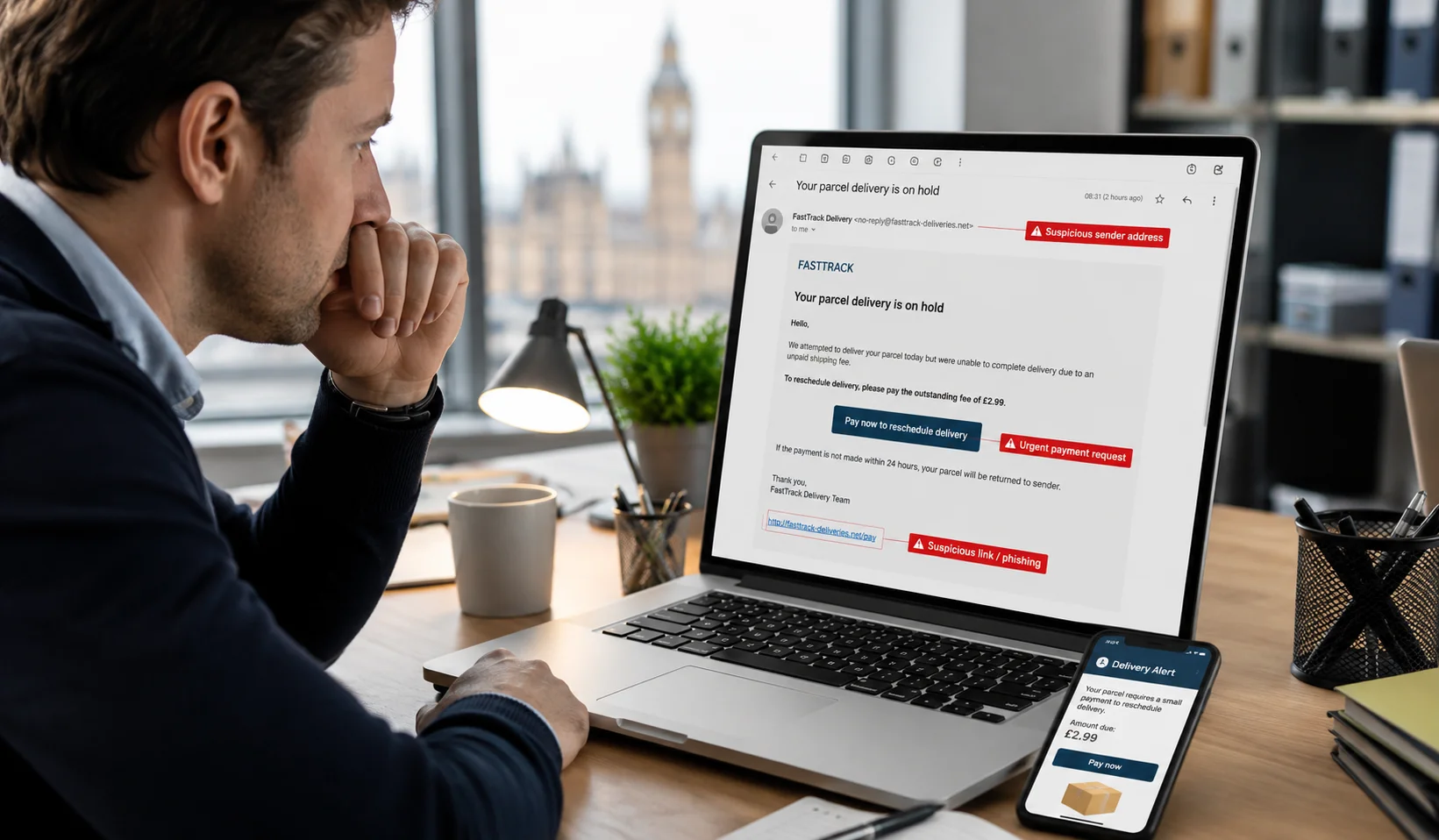
Receiving a delivery notification may seem routine, but a DPD scam email can quickly turn a simple parcel update into a serious cybersecurity risk.
These fraudulent emails are designed to trick you into sharing personal information, banking details, or payment card data through fake delivery notifications and phishing websites.
As parcel delivery scams continue to rise across the UK, understanding the warning signs is essential.
Key points:
- DPD does not request advance redelivery fees via suspicious emails.
- Official DPD emails come from authorised domains.
- Fake emails often create urgency to pressure quick action.
- Suspicious links and attachments can lead to phishing websites or malware.
- Reporting scams helps protect other consumers and supports fraud investigations.
What Is a DPD Scam Email and Why Are These Delivery Scams Increasing in the UK?

A DPD scam email is a fraudulent message that impersonates the courier company DPD to deceive recipients into revealing sensitive information or making payments. These emails often claim that a parcel could not be delivered, requires additional payment, or needs delivery details to be confirmed.
The popularity of online shopping has created an ideal environment for cybercriminals. Since millions of parcels are delivered daily across the UK, many recipients may not immediately question an unexpected DPD delivery notification. Scammers exploit this uncertainty by sending realistic-looking emails that appear genuine at first glance.
“Delivery notifications are highly effective phishing tools because they target users during routine online purchasing activity, when trust levels are naturally higher.” — UK Cybersecurity Analyst
In recent years, fraud reporting agencies have documented substantial financial losses linked to fake courier communications.
Modern phishing campaigns are also becoming more sophisticated, with improved branding, convincing language, and professional-looking websites designed to mimic legitimate services.
What Are the Most Common Red Flags of a DPD Scam Email?
Recognising warning signs early can prevent significant financial and personal damage.
Common warning signs include:
- An unfamiliar sender address that does not use an official DPD domain.
- Requests for small redelivery fees or verification payments.
- Threatening messages claiming parcels will be returned immediately.
- Links directing you to websites that differ from official DPD addresses.
- Unexpected attachments requiring download.
- Duplicate logos, poor formatting, or unusual branding.
- Spelling mistakes and awkward language.
Many scammers deliberately create a sense of urgency. Statements such as “Immediate action required” or “Your parcel will be returned today” are designed to encourage impulsive decisions. Legitimate courier companies generally provide clear instructions without applying pressure.
Understanding these red flags significantly reduces the likelihood of becoming a victim.
How Can You Tell Whether a DPD Email Is Genuine or Fraudulent?
As DPD scam emails become more convincing, verifying whether a message is genuine is essential. Although many phishing emails closely resemble official DPD communications, a few simple checks can help you identify scams and avoid delivery fraud.
Which Email Addresses and Domains Does DPD Officially Use?
One of the simplest verification methods is checking the sender’s email address. Genuine DPD communications typically originate from recognised company domains rather than free email services.
Domain verification checklist:
| Genuine Indicators | Warning Signs |
| Official DPD domain addresses | Gmail, Hotmail or Yahoo addresses |
| Consistent company branding | Misspelled company names |
| Secure website links | Random or shortened URLs |
| Valid tracking references | Missing parcel details |
Cybercriminals frequently register domains that closely resemble legitimate company names. A single altered letter can easily go unnoticed if you are not paying attention.
What Delivery and Customs Payment Requests Are Legitimate?
There are limited circumstances where DPD may request payment, particularly for customs duties on international deliveries. However, these communications typically contain a verifiable parcel reference.
Legitimate customs requests usually include a specific parcel number that can be checked independently through official tracking services. Scammers rarely provide information that can be verified through authorised channels.
If an email requests payment but lacks clear parcel details, treat it with extreme caution. Taking a few moments to verify information directly through DPD’s website can prevent significant losses.
What Do Real DPD Scam Emails Typically Look Like?
Most DPD phishing campaigns follow familiar patterns. Common subject lines include phrases such as “Shipping Update”, “Delivery Failed”, or “Action Required to Receive Your Parcel”.
Scammers often replicate company logos and design elements to create credibility. However, subtle inconsistencies usually reveal the fraud.
Comparison between genuine and fraudulent communications:
| Feature | Genuine DPD Email | DPD Scam Email |
| Sender Address | Official company domain | Lookalike or generic email |
| Payment Requests | Limited and verifiable | Unexpected redelivery fees |
| Tracking Details | Genuine parcel information | Fake or missing references |
| Website Links | Official DPD website | Imitation phishing sites |
| Language Quality | Professional communication | Errors and unusual phrasing |
Some phishing emails also contain unusual language combinations, duplicate logos, or references translated incorrectly from other languages. These details often indicate a mass-produced scam campaign targeting multiple countries.
Carefully reviewing these elements before clicking any links provides an additional layer of protection.
What Should You Do If You Receive a Suspicious DPD Scam Email?

If you receive a suspicious email claiming to be from DPD, your first response should be caution rather than curiosity. Even seemingly harmless clicks can expose sensitive information.
Recommended actions:
- Avoid clicking links or downloading attachments.
- Verify parcel information directly through the official DPD website.
- Forward phishing emails to report@phishing.gov.uk.
- Delete the email after reporting it.
- Inform colleagues or family members if similar messages are circulating.
The UK’s National Cyber Security Centre encourages consumers to report suspicious communications, helping authorities identify and disrupt large-scale phishing operations.
Taking these simple steps protects both your personal information and the wider community from fraud.
What Happens If You Click a Link or Share Information with Scammers?
If you have interacted with a DPD scam email, taking quick action can help minimise potential damage. The steps you should take depend on whether you clicked a link, entered personal information, or shared financial details.
What Immediate Steps Should You Take to Protect Your Money and Accounts?
If you clicked a malicious link or submitted information, act as quickly as possible to secure your accounts and finances.
- Contact your bank immediately if you shared payment or banking details.
- Change passwords for any affected accounts.
- Enable multi-factor authentication (MFA) for added security.
- Run a security scan on your device to check for malware.
“The first few hours after a phishing incident are critical. Rapid reporting and account protection measures can dramatically reduce financial losses.” — Financial Fraud Prevention Specialist
When Should You Report the Incident to Action Fraud?
Any case involving financial loss, attempted fraud, or compromised personal information should be reported to Action Fraud, the UK’s national fraud reporting centre.
When reporting the incident:
- Provide screenshots of the scam email or website.
- Include sender details and suspicious web addresses.
- Keep records of any payments or communications.
- Report as soon as possible to support investigations.
Even if no money was lost, reporting helps authorities track scams and identify emerging fraud threats.
Why Is Reporting a DPD Scam Email Important for UK Consumers?

Reporting phishing attempts benefits far more than the individual recipient. Every report helps authorities identify active scam campaigns and issue public warnings before larger numbers of consumers are affected.
National organisations such as the National Cyber Security Centre and Action Fraud rely on public reporting to monitor evolving cyber threats. Information collected through reports can contribute to website takedowns, domain blocking, and broader fraud prevention initiatives.
For businesses, reporting suspicious emails also helps protect employees and customers from targeted attacks. As phishing campaigns become increasingly sophisticated, collective vigilance plays a vital role in reducing their effectiveness.
By reporting suspicious communications rather than simply deleting them, you contribute to a safer digital environment for everyone.
How Can You Protect Yourself from Future DPD Phishing Emails and Delivery Scams?
Prevention is the best defence against phishing attacks and delivery scams. Following safe online habits can greatly reduce your risk.
When expecting a parcel, always check delivery updates through the courier’s official website or app instead of clicking links in emails or text messages. Bookmarking trusted websites can help you avoid fraudulent links.
To stay protected:
- Access tracking information directly through DPD’s official website.
- Check sender details carefully and be wary of emails requesting payments or personal information.
- Use email filtering and spam protection to reduce phishing messages.
- Keep antivirus software updated to help detect malicious websites and files.
- Install software updates regularly to maintain device security.
- Use strong passwords and enable multi-factor authentication (MFA) where available.
- Report suspicious emails to the courier and your email provider.
Many security tools can identify suspicious websites before you interact with them, adding an extra layer of protection.
“Consumers who independently verify delivery notifications rather than relying on embedded email links are considerably less likely to become phishing victims.” — Cyber Threat Intelligence Consultant
Staying informed and verifying delivery notifications independently can significantly reduce the risk of falling victim to future DPD phishing emails and delivery scams.
Conclusion
A DPD scam email is designed to exploit trust in a recognised courier brand by encouraging recipients to click malicious links, disclose personal information, or make fraudulent payments. While these scams continue to evolve, their core tactics remain largely unchanged.
Always verify delivery information through official channels, inspect sender addresses carefully, avoid clicking unexpected links, and report suspicious emails to the appropriate authorities. A cautious approach can prevent identity theft, financial loss, and unnecessary stress.
FAQs About DPD Scam Email
Can scammers send DPD scam emails even if I am not expecting a parcel?
Yes. Scammers often send messages to thousands of recipients at once, hoping some individuals are expecting deliveries and will respond without verifying the email.
Are DPD scam emails sent only by email, or can they arrive by text message too?
No. Fraudsters frequently use both email and SMS messages, often known as “smishing” attacks, to impersonate delivery companies.
How can I check whether a parcel tracking number is genuine?
Enter the tracking number directly into the official DPD tracking service rather than using links provided in emails or text messages.
Can a phishing email infect my device without downloading an attachment?
In some cases, simply visiting a malicious website can expose vulnerabilities, particularly if software is outdated.
What information should never be shared in response to a delivery notification?
You should never provide banking details, card numbers, PINs, passwords, security codes, or identity verification information through email links.
How do cybercriminals obtain email addresses for delivery scams?
Addresses may be gathered through data breaches, marketing databases, social engineering techniques, or publicly available online information.
Is it safe to open a suspicious email if I do not click any links?
Generally, viewing an email is less risky than interacting with its content, but caution is still advised. Avoid opening attachments or responding to suspicious messages.