

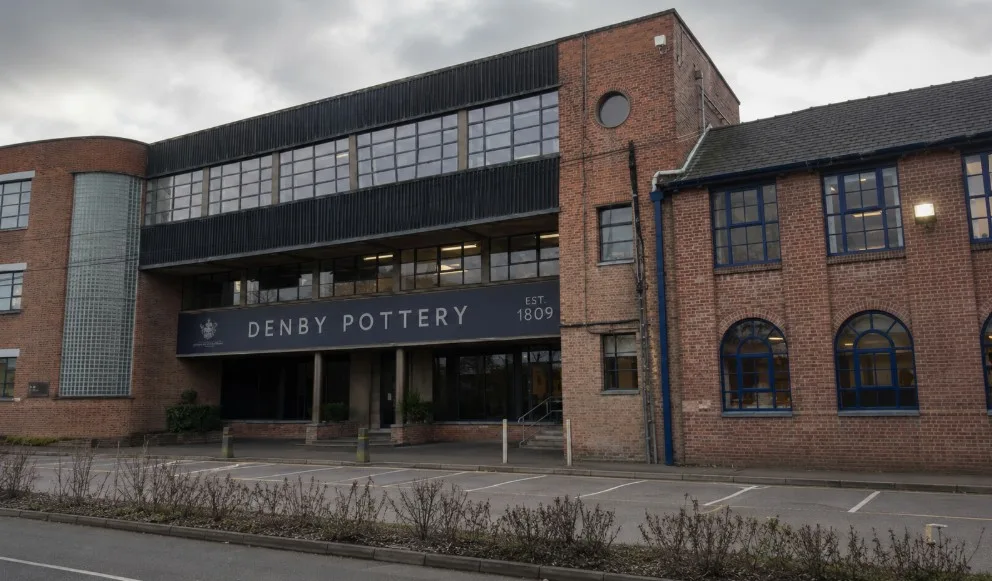
Denby, the historic British pottery manufacturer, along with its subsidiary Burgess & Leigh Ltd (Burleigh), entered administration on 31 March 2026 due to rising energy costs, increasing labour expenses, and weaker consumer demand.
Manufacturing has ceased at its Derbyshire factory, although parts of the business continue trading while administrators seek buyers and investors. The situation has raised concerns among customers, collectors, and employees about the brand’s future.
Key updates:
- Denby entered administration on 31 March 2026.
- Manufacturing operations have ended.
- Online orders and stores remain operational.
- International subsidiaries continue trading normally.
- FRP Advisory is seeking buyers for the business and brands.
Has Denby Gone into Administration and What Is the Current Situation in 2026?
Yes, Denby has gone into administration. The company filed a notice of intention to appoint administrators on 11 March 2026 before officially appointing FRP Advisory on 31 March 2026.
The administration affects the UK-based Denby Group and its subsidiary Burgess & Leigh Ltd, which produces the well-known Burleigh pottery range. The move followed months of financial challenges caused by rising operating costs and weaker consumer demand.
Despite entering administration, Denby has not completely ceased trading. The company continues to operate certain parts of the business while administrators explore options to sell the brands, assets, and remaining operations.
Current business status:
| Area of Business | Current Status |
| UK Manufacturing | Ceased |
| Online Orders | Operating |
| Retail Stores | Operating in many locations |
| Denby Pottery Village | Open |
| International Subsidiaries | Operating normally |
| Administration Process | Ongoing |
Although production has ended, the administration process provides an opportunity for potential investors or buyers to acquire parts of the business and preserve elements of the brand’s legacy.
Why Did Denby Go into Administration After More Than 200 Years in Business?
Founded in 1809 by William Bourne, Denby built a reputation as one of Britain’s most respected pottery manufacturers. For over two centuries, the company produced handcrafted stoneware using locally sourced Derbyshire clay.
However, even a heritage brand with a loyal customer base proved vulnerable to economic pressures.
Several factors contributed to Denby’s financial difficulties:
- Soaring industrial energy costs
- Increased labour and employment expenses
- Lower consumer confidence
- Reduced discretionary spending on premium homeware
- Difficulty securing sufficient investment
- Broader challenges across the UK ceramics industry
The ceramics sector is energy-intensive, with rising energy and employment costs putting significant financial pressure on manufacturers, as highlighted by Denby.
“The notice of intention was filed as a precautionary measure, and to provide a period of stability and short-term protection while exploring a range of options to secure a strategic investment partner.” — Denby Group Statement
The company’s challenges also reflected wider problems facing British ceramics manufacturers, many of whom have experienced similar financial pressures in recent years.
What Happened Between Denby’s Financial Difficulties and the Appointment of Administrators?
Facing rising energy costs, increasing labour expenses, and weaker consumer demand, Denby explored options to secure its future. On 11 March 2026, the company filed a notice of intention to appoint administrators, giving temporary protection while seeking investment and restructuring opportunities.
Despite discussions with stakeholders and potential investors, no viable solution was secured before administrators were appointed.
How Did the #SaveDenby Campaign Attempt to Protect the Business?
As Denby’s financial struggles became more public, the company launched the #SaveDenby campaign to boost customer support, raise awareness of industry challenges, and call for government help with rising energy costs. The campaign gained strong public backing and helped maintain trading activity.
Denby encouraged purchases, sought investors, and explored restructuring options. However, insufficient investment led to FRP Advisory being appointed as administrators on 31 March 2026 while efforts continued to find buyers.
Has Denby Stopped Manufacturing Pottery and What Happened at the Derbyshire Factory?
One of the most significant developments since the administration announcement has been the closure of manufacturing operations at Denby’s historic Derbyshire site.
Administrators were unable to secure a buyer for the manufacturing division, leading to the closure of production and design departments. This decision resulted in substantial redundancies and brought more than 200 years of pottery production to an end.
The final pieces were fired in Denby’s kilns in 2026, marking a historic moment for British manufacturing.
Factory impact summary:
| Development | Outcome |
| Manufacturing Operations | Closed |
| Design Department | Closed |
| Final Kiln Production | Completed |
| Redundancies | More than 130 reported |
| Pottery Production Heritage | Ended after over 200 years |
In a statement reflecting on the closure, the company paid tribute to generations of workers who helped build the brand’s reputation around the world.
“Centuries of making pottery at Denby may be coming to a close, but the love and soul poured into each piece will live on.” — Denby Statement
The closure represents not only the loss of a manufacturing facility but also a significant moment in Britain’s industrial heritage. Nevertheless, the Denby brand itself may yet survive through a future sale process.
Is Denby Still Trading and Can Customers Still Buy Denby Products?

A common misconception is that administration automatically means a company stops trading. In Denby’s case, that is not currently true. The business continues to trade while administrators manage the sale process and assess potential opportunities.
Customers can still:
- Place orders through the Denby website
- Visit operational retail stores
- Shop at Denby Pottery Village
- Purchase available stock collections
- Access products from international operations
Some customers may experience occasional delivery delays due to increased demand and operational adjustments following the administration process. However, the company has stated that it intends to continue fulfilling orders wherever possible.
Importantly, Denby’s subsidiaries in the United States, China, and South Korea are not currently in administration and continue to operate normally.
For consumers, the practical impact remains relatively limited compared with what many would expect following a major administration announcement. As long as stock remains available, products can still be purchased through existing channels.
What Does Denby’s Administration Mean for Customers, Employees, Suppliers and Collectors?
Denby’s administration has created uncertainty for employees, suppliers, customers, and collectors as administrators assess the future of the business. While administration does not necessarily mean closure, it signals a period of major change and restructuring.
The biggest impact has been on employees, with more than 130 redundancies following the closure of manufacturing and design operations in Derbyshire.
Suppliers and business partners also face uncertainty as future ownership decisions and restructuring plans could affect contracts, partnerships, and supply chains.
What Should Customers and Collectors Know Going Forward?
Customers who have already placed orders should continue monitoring communications from Denby regarding fulfilment and delivery updates.
Collectors may also be paying close attention to developments. Denby products have long been valued for their durability, timeless designs, and ability to be replaced over many years.
Interestingly, public discussion surrounding the administration has highlighted the brand’s enduring appeal. In one Reddit discussion, a user commented:
“If you get Denbyware as a young adult, it’ll last you your whole life (give or take the odd smash, but the designs are classic and so you can get replacements).”
Another user wrote:
“We got a full set of Denby plates and bowls about 9 years ago and just the other day I was marveling at how well they’re holding up.”
These comments illustrate that while some consumers question whether premium pottery remains relevant, many still view Denby as a durable long-term investment rather than a disposable household purchase.
Can Denby Be Saved Through a Sale, Investment or Business Rescue Process?
The future of Denby now depends largely on the administration process and the ability of FRP Advisory to attract suitable buyers.
Administrators are actively exploring options for the sale of some or all of the business. Potential investors may be attracted by the strength of the Denby and Burleigh brands, their international recognition, and their established customer base.
“The strength and recognition of these brands is undeniable. We are focused on progressing the sale process as quickly as possible.” — Tony Wright, FRP Advisory
Potential outcomes include:
- Sale of the Denby brand
- Sale of the Burleigh brand
- Acquisition of retail operations
- Purchase of intellectual property and designs
- Strategic investment leading to future brand continuation
However, preserving the brand and restarting UK manufacturing are two separate issues. Even if a buyer emerges, there is no guarantee that pottery production will return to Derbyshire.
What Does Denby’s Collapse Reveal About the Future of the UK Ceramics Industry?

Denby’s administration has reignited debate about the future of British ceramics manufacturing. The UK government recently announced a £120 million support package for the ceramics industry, including funding for energy efficiency improvements and operational support. While many welcomed the initiative, some former Denby workers argued the assistance arrived too late to save the company.
Former employees have expressed concern that rising energy costs continue to threaten other manufacturers across the sector.
Business and Trade Secretary Peter Kyle emphasised the government’s long-term ambitions:
“I want them to think about the future so this can be a pathway to long-term sustainable businesses that are highly profitable into the future.”
Denby’s situation is not unique. Other pottery manufacturers have also experienced closures, liquidations, or production pauses due to similar pressures. As a result, the company’s administration has become a symbol of the wider challenges facing traditional British manufacturing industries.
Conclusion
Yes, Denby has gone into administration, marking a significant moment for one of Britain’s most iconic pottery manufacturers. While production at the Derbyshire factory has ended, the business continues to trade as administrators seek potential buyers for its brands and operations.
The outcome of the administration process will determine whether Denby’s heritage can continue under new ownership, making the coming months crucial for the future of this historic British brand.
Frequently Asked Questions
How long can a company remain in administration in the UK?
Administration typically lasts up to 12 months initially, although extensions can be granted if required.
Is administration the same as liquidation?
No. Administration aims to rescue a business or maximise returns to creditors, whereas liquidation involves winding up a company and selling its assets.
Why were Denby’s international subsidiaries not included in the administration?
The subsidiaries in the USA, China, and South Korea operate as separate entities and were not part of the UK administration process.
What makes Denby pottery different from other tableware brands?
Denby is known for handcrafted stoneware made from Derbyshire clay, with a reputation for durability and long-lasting quality.
Could another company buy the Denby brand without reopening the factory?
Yes. A buyer could acquire the brand, intellectual property, and retail operations without restarting manufacturing at the original site.
How has the administration affected the local Derbyshire economy?
The closure of manufacturing and resulting redundancies have affected employment and economic activity in the Amber Valley area.
Are British pottery manufacturers receiving government support for energy costs?
The government has announced funding and support measures for the ceramics industry, including assistance aimed at reducing energy-related pressures.