

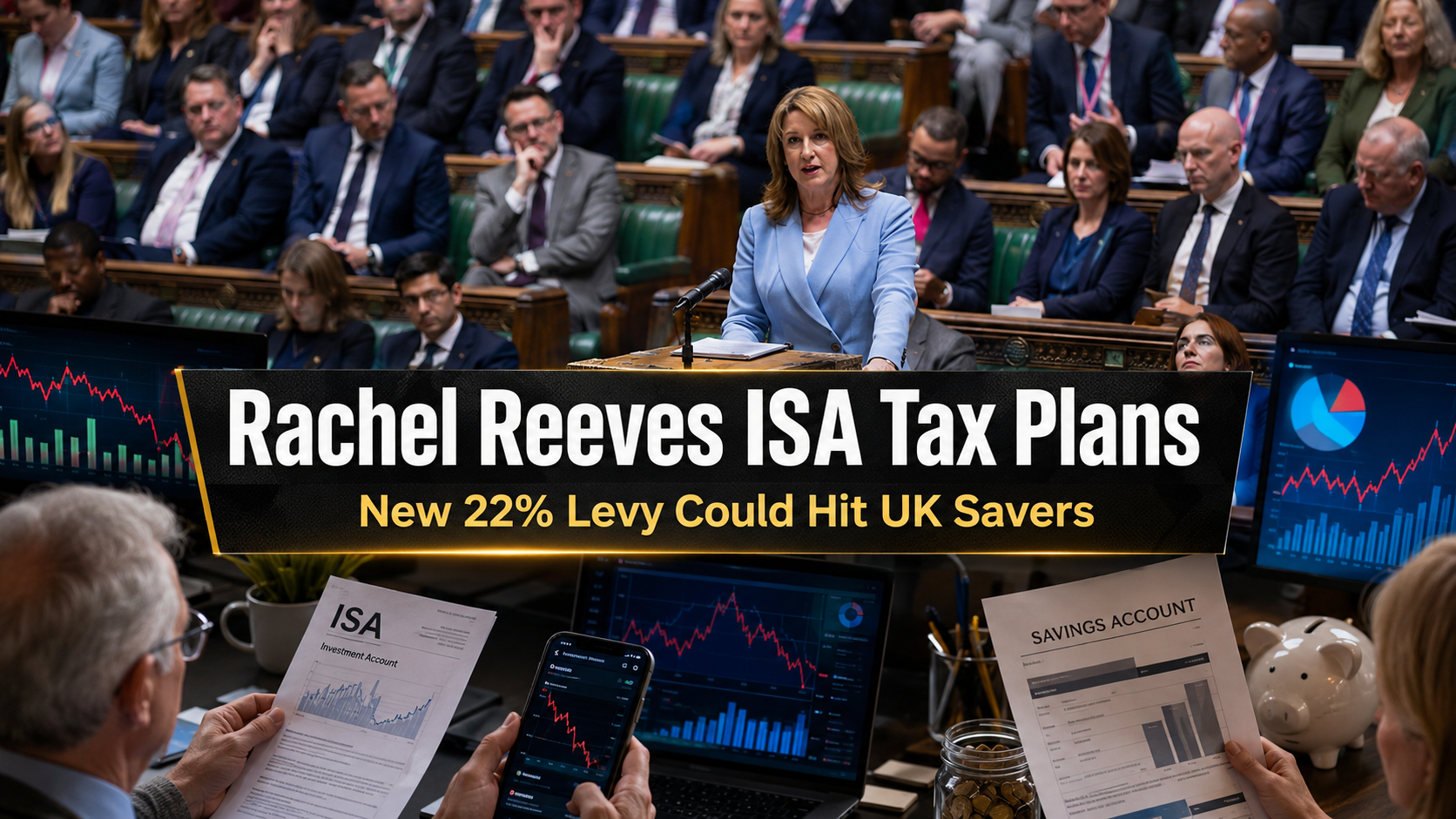
Rachel Reeves’ proposed ISA reforms could bring significant changes for UK savers, including a reported 22% levy on interest earned from cash held within stocks and shares ISAs from April 2027.
The plans form part of the Government’s wider strategy to reduce reliance on cash savings and encourage more investment into UK markets. If introduced, the reforms may affect millions of savers, particularly retirees, cautious investors and individuals holding temporary cash balances inside investment ISAs.
Key Takeaways:
- Cash ISA allowance may fall from £20,000 to £12,000
- A proposed 22% levy could apply to cash inside investment ISAs
- Stocks and shares ISA allowance would remain at £20,000
- Money market funds and cash-like investments may face restrictions
- The reforms are expected to begin from April 2027
- Financial experts have raised concerns about implementation and clarity
What Is Rachel Reeves’ Proposed Investment ISA Levy?

The proposed investment ISA levy refers to a planned 22% tax charge on interest earned from cash held inside stocks and shares ISAs from April 2027. The move is part of wider Treasury reforms aimed at reducing reliance on cash savings and increasing investment activity in UK financial markets.
At present, ISA savings remain largely tax-free. However, under the new proposals, cash sitting within investment ISAs could become taxable if it exceeds future limits or falls under newly defined “cash-like” holdings.
The Government believes many savers may attempt to avoid reduced cash ISA limits by moving large balances into stocks and shares ISAs while still holding the money in low-risk cash positions. The levy is designed to prevent this approach.
Key features of the proposed ISA changes
- 22% tax charge on qualifying interest earnings
- Introduction expected from April 2027
- Cash ISA allowance reduced to £12,000
- Stocks and shares ISA limit remains at £20,000
- Restrictions on money market funds and cash-like holdings
- New transfer rules between ISA products
Why Is the Government Reducing the Cash ISA Allowance?
The Treasury argues that too much household wealth in the UK remains locked in low-growth cash savings rather than investments that support businesses and economic growth.
Rachel Reeves’ reforms are intended to encourage more people to place money into stocks and shares ISAs instead of relying heavily on cash ISAs.
How ISAs Currently Work in the UK?
Currently, adults can save or invest up to £20,000 annually across different ISA products without paying tax on interest, dividends or capital gains.
The most common ISA products include:
| ISA Type | Purpose | Current Tax Treatment |
| Cash ISA | Savings account | Tax-free interest |
| Stocks & Shares ISA | Investments | Tax-free gains |
| Innovative Finance ISA | Peer-to-peer lending | Tax-free returns |
| Lifetime ISA | House purchase/retirement | Government bonus included |
Under the proposed reforms, the tax-free treatment of cash held inside investment ISAs could partially change.
Why Ministers Prefer Investment-Based Savings?
The Government believes investment-focused savings generate stronger long-term economic benefits than cash savings accounts. Historically, stocks and shares have delivered higher returns than standard savings products over long periods.
Officials also argue that encouraging investment may:
- Support UK businesses and infrastructure
- Increase capital market participation
- Improve long-term household wealth growth
- Reduce inflation-related erosion of savings value
A chartered financial planner described the concern clearly:
“Many clients use stocks and shares ISAs simply as a temporary holding place for cash while deciding where to invest. I think a lot of savers will be surprised to discover that this strategy could trigger tax charges under the proposed rules.”
How Could the New 22% ISA Levy Affect UK Savers?

The proposed levy could affect millions of savers across the UK, especially those who hold significant cash balances inside investment ISAs.
Many investors temporarily leave uninvested cash within stocks and shares ISAs while waiting for market opportunities. Under the proposed changes, interest earned on those balances may become taxable.
Impact on Retirees and Conservative Savers
Retirees and low-risk savers may face some of the biggest challenges under the reforms because they often prioritise capital protection over investment growth.
Potential concerns include:
- Reduced tax efficiency on cash holdings
- Increased complexity around ISA management
- Higher risk exposure if forced towards investments
- Confusion over new HMRC classifications
The number of people paying tax on savings interest has already increased sharply in recent years.
| Tax Year | Estimated Number Paying Savings Tax |
| 2022–23 | 1.2 million |
| 2024–25 | 2.1 million |
| 2026–27 Forecast | 2.8 million |
What Happens to Cash Held Inside Stocks and Shares ISAs?
Cash balances held inside stocks and shares ISAs are often used for:
- Awaiting investment opportunities
- Portfolio rebalancing
- Dividend accumulation
- Short-term risk reduction
Under the proposed rules, HMRC may classify some of these holdings as taxable cash savings rather than investment assets.
An investment adviser explained the issue this way:
“I regularly see clients keeping cash inside their investment ISA for flexibility. They are not trying to avoid tax — they simply want quick access for future investment decisions. The new rules could create uncertainty for ordinary investors who have followed standard portfolio practices for years.”
Which Investments Could Be Affected by the New Rules?
One of the biggest areas of uncertainty involves “cash-like” investments.
HMRC has already indicated that products resembling cash savings may face restrictions or taxation within stocks and shares ISAs.
Potentially affected assets include:
- Money market funds
- Short-term government bond funds
- Near-cash liquidity funds
- Certain low-volatility investment products
Money market funds have become increasingly popular because they often deliver slightly better returns than standard savings accounts while maintaining relatively low risk.
| Investment Type | Risk Level | Possible Impact Under New Rules |
| Cash Savings | Very Low | Taxable under new levy |
| Money Market Funds | Low | Potential restrictions |
| Equity Investments | Higher | Likely unaffected |
| Government Bond Funds | Moderate | Under review |
The Treasury also plans to restrict transfers from stocks and shares ISAs into cash ISAs under the new framework.
These changes are designed to stop savers from moving large sums strategically between ISA products to maximise tax-free cash interest.
Why Are Financial Experts Concerned About the ISA Changes?

Financial institutions, investment firms and brokers have expressed concerns about the speed and complexity of the proposed reforms.
Many companies believe the Treasury has not yet provided enough operational detail ahead of the planned April 2027 launch.
Industry concerns include:
- Lack of clarity around “cash-like” definitions
- Administrative system changes
- Compliance costs for ISA providers
- Potential confusion for savers
- Limited implementation timeframes
Rachel Vahey of AJ Bell highlighted concerns about the timeline and operational readiness surrounding the reforms.
Several firms have warned that uncertainty could damage confidence among retail investors and discourage long-term savings participation.
| Concern Area | Why It Matters |
| Regulatory clarity | Firms need time to prepare systems |
| Investor confidence | Uncertainty may reduce participation |
| Tax complexity | Savers may struggle to understand rules |
| Market behaviour | Investors may shift money prematurely |
Could Savers Avoid the Proposed ISA Tax Charges?
While the proposals are still developing, many savers are already reviewing their financial strategies ahead of 2027.
Possible considerations may include:
- Maximising current cash ISA allowances before reforms begin
- Diversifying savings across different products
- Investing gradually instead of holding excess cash
- Seeking regulated financial advice
- Reviewing portfolio liquidity strategies
However, tax planning should always comply with HMRC regulations and individual financial circumstances.
Savers may also need to monitor future Treasury announcements carefully, as several technical details remain unresolved.
How Does the New ISA Levy Compare With Previous Tax Rules?
The proposed levy resembles older ISA taxation systems that existed before 2014.
Previously, cash interest earned within certain investment ISAs attracted a 20% tax charge. The proposed 22% levy would effectively revive a similar structure in updated form.
| ISA Tax Rules | Before 2014 | Proposed 2027 System |
| Tax on ISA cash interest | 20% levy | 22% levy |
| Cash ISA allowance | Lower limits | £12,000 planned |
| Stocks & Shares ISA | Tax advantages retained | Tax advantages retained |
| Transfer flexibility | More restricted | Restrictions expected |
The reforms also reflect broader Government efforts to tighten anti-avoidance measures across savings products.
Officials argue that without restrictions, many savers would simply shift cash into investment ISAs while avoiding genuine market investment exposure.
What Does This Mean for the Future of UK Savings and Investments?

The reforms could represent one of the biggest shifts in UK savings policy in recent years.
Supporters believe the changes may encourage greater investment participation and help strengthen UK financial markets over the long term.
Critics, however, argue the proposals may unfairly penalise cautious savers who prefer lower-risk financial products.
Possible long-term outcomes include:
- Increased demand for investment advice
- Greater public interest in stocks and shares ISAs
- Reduced reliance on traditional cash savings
- More complex ISA tax planning
- Higher scrutiny of low-risk investment products
The success of the reforms may ultimately depend on how clearly the Treasury explains the rules and whether savers feel confident adapting to the changes.
Conclusion
Rachel Reeves’ proposed ISA reforms could mark a major change for UK savers, particularly those holding large cash balances within investment ISAs.
While the Government believes the new rules will encourage more long-term investing and support UK markets, many savers remain concerned about additional tax costs and reduced flexibility.
With the proposed 22% levy expected from 2027, individuals may need to review their savings strategies carefully. Clear guidance from the Treasury will be essential to help households understand and prepare for the upcoming ISA changes.
FAQs
Will Rachel Reeves tax all ISAs in the UK?
No. The proposed reforms mainly target cash held within stocks and shares ISAs and changes to cash ISA allowances. Traditional ISA tax advantages are expected to remain for most investment growth and capital gains.
What is the proposed 22% ISA levy?
The levy refers to a reported 22% tax charge on interest earned from cash balances held inside stocks and shares ISAs from April 2027.
When will the new ISA tax rules start?
Current reports suggest the reforms could begin from April 6, 2027, although final Treasury legislation has not yet been fully confirmed.
Are stocks and shares ISAs still tax efficient?
Yes. Stocks and shares ISAs are still expected to offer tax-free investment growth and capital gains under the proposed system.
What are cash-like investments in ISAs?
Cash-like investments include products such as money market funds and low-risk liquidity funds that behave similarly to cash savings accounts.
Could ISA reforms affect retirees and low-risk savers?
Yes. Retirees and conservative savers who rely heavily on cash savings strategies could face additional tax exposure and planning complexity.
Why is the Government encouraging investment instead of cash savings?
The Government believes long-term investing can generate higher returns for households while also supporting UK businesses and economic growth.