

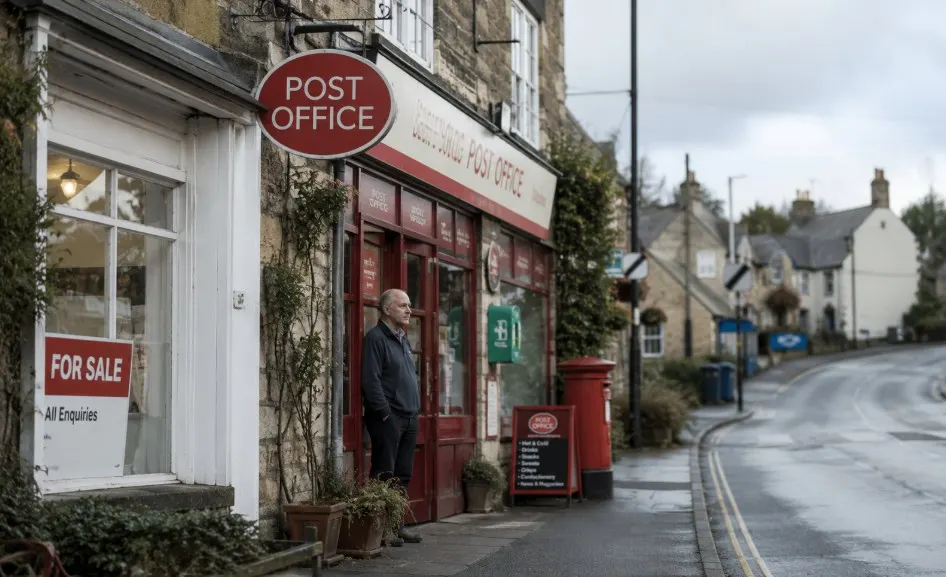
The Rural Post Office tax rise could place hundreds of village branches under serious financial pressure in 2026/27, as business rates bills increase across the network. Rural branches are among the most exposed because many operate on thin margins while providing essential local services.
Key issues:
- Post Office branches face an additional £29 million business rates burden.
- Around 600 more branches are expected to become liable.
- Rural outlets may face a four-fold increase compared with 2023/24.
- Closures could affect cash access, parcels, bill payments and community support.
Why Is the Rural Post Office Tax Rise Putting Village Branches at Risk?
The rural post office tax rise is not simply another operating cost. For many village branches, it lands at a time when postmasters are already dealing with higher staffing costs, increased National Insurance contributions, reduced high street footfall and pressure on margins.
Unlike larger retailers, many post offices are independently run by postmasters. They often operate inside convenience stores or small village shops, where the Post Office counter is only one part of the business. Even a modest rise in fixed costs can make the wider branch harder to sustain.
The latest research commissioned by the Post Office suggests the network will pay around £43 million in business rates in 2026/27, a near-200% increase. Of that, the additional cost is estimated at £29 million.
“Post Offices are a lifeline for many communities. There is a structural unfairness in how the tax burden falls across the Post Office network,” said Post Office chief executive Neil Brocklehurst.
For rural communities, the risk is not only commercial. If a branch closes, residents may lose access to cash, parcel services, banking support and everyday government-related services.
How Much More Will Rural Post Offices Pay in Business Rates?
The figures show why postmasters are concerned. The average Post Office branch is expected to pay around £3,700 in business rates this year. One in four branches could pay more than £5,000, while almost one in ten may face bills above £10,000.
Key 2026/27 Business Rates Figures
| Measure | Reported Impact |
| Additional business rates cost across network | £29 million |
| Total expected business rates bill | £43 million |
| Average branch bill | £3,700 |
| Branches paying over £5,000 | 1 in 4 |
| Branches paying over £10,000 | Nearly 1 in 10 |
| Additional branches becoming liable | Around 600 |
| Rural branch increase compared with 2023/24 | Around four-fold |
These increases are especially difficult for smaller outlets because business rates are linked to property valuation rather than profitability. A branch can therefore face a higher tax bill even if its turnover has not grown enough to absorb the cost.
Why Are 600 More Branches Now Liable?
The April revaluation, described as the first since the pandemic, has pushed around 600 additional Post Office branches above the threshold for business rates liability. Some outlets that were previously exempt are now expected to pay.
This matters because many rural branches operate in areas where customer numbers are steady but limited. Their role may be socially essential, yet commercially fragile.
Why Are Small Rural Post Offices Hit Harder Than Larger Retailers?
Small rural post offices are vulnerable because their costs are fixed while their customer base is limited. A branch in a village cannot always increase sales or footfall in the way a larger urban retailer might.
There is also a structural issue. Post offices provide public-facing services, but most are run as small private businesses. This means postmasters carry commercial risk while supporting services that communities rely on.
The pressure is not limited to business rates. Postmasters are also facing:
- Higher National Insurance contributions
- Minimum wage-related staffing cost increases
- Energy and operating cost pressures
- Reduced high street and local retail footfall
- Investment needs linked to modernisation
This combination means the rural post office tax rise may become the final pressure point for branches already close to the edge.
What Could Village Post Office Closures Mean for Rural Communities?
A village post office is often more than a counter service. In rural areas, it may act as a banking access point, parcel hub, bill payment location and informal community support centre.
For older residents, digitally excluded households and people without reliable transport, closure can create real hardship. Travelling to the next town may not be simple, especially where bus services are limited.
Community Impact Snapshot:
| Group Affected | Possible Impact |
| Elderly residents | Less access to cash, bills and in-person support |
| Small businesses | Harder to send parcels, deposit cash or manage payments |
| Digitally excluded users | Fewer non-digital service options |
| Local shops | Reduced footfall if the Post Office counter closes |
| Rural households | Longer travel times for essential services |
“The value of a rural post office cannot be measured only through turnover. Its social role, particularly for older and less digitally connected residents, should be considered in any tax decision,” said a local business policy adviser.
If village branches disappear, nearby shops may also suffer because Post Office visits often bring customers through the door.
How Does the Business Rates System Affect Postmasters In 2026?
Business rates are charged on non-domestic properties and are linked to a property’s rateable value. When valuations change, a business may move into a higher liability position, even without a major increase in income.
For postmasters, this creates a mismatch between tax and trading reality. A rural branch can face a higher bill because of valuation changes, while still serving a small and relatively fixed customer base.
The case of Dibden Purlieu Post Office in Hampshire illustrates the issue. Postmaster Paul Patel said his business rates bill rose from £5,089 to £7,154, an increase of more than £2,000. He also pointed to higher tax, National Insurance and staffing costs linked to the minimum wage.
“These rising costs come on top of increased tax and National Insurance contributions linked to the higher minimum wage. Altogether, it means my outgoings are rising by thousands of pounds a year,” said Paul Patel.
This example shows why the issue is not just about one tax line. It is about cumulative pressure on small operators.
What Support Are Post Offices Calling for from the Government?
The Post Office and postmasters are calling for targeted business rates relief across all four UK nations. Limited support already exists in Wales and Northern Ireland, but the network argues that a broader and more consistent approach is needed.
Possible support options include:
- Targeted business rates relief for essential Post Office branches
- Special protection for rural and remote outlets
- Recognition of community value in tax policy
- Alignment with the Government’s High Streets Strategy
- Support linked to branches providing banking and cash access
A Treasury spokesman defended the Government’s approach, pointing to wider business support, including a £4.3 billion package to limit bill rises, corporation tax capped at 25%, red tape reduction and cost-of-living measures intended to support footfall.
The challenge is whether general business support is enough for a network with a public service role.
Could Targeted Business Rates Relief Prevent Rural Post Office Closures?
Targeted relief could reduce immediate pressure, especially for branches where the Post Office counter is essential but not highly profitable. It would not solve every issue, but it could prevent sudden closures caused by steep tax increases.
The strongest argument for relief is that rural post offices are not ordinary retailers. They provide services that banks, government systems and digital platforms do not fully replace for every resident.
A balanced policy response would need to protect essential branches while encouraging modernisation. The Post Office is already pursuing transformation plans, including increased postmaster remuneration and branch modernisation. However, these changes may take time, while tax bills are immediate.
“The most effective support would focus on branches that provide essential in-person services where no realistic local alternative exists,” said a rural economy consultant.
Conclusion
The Rural Post Office tax rise has become a major concern because it affects more than branch finances. It raises questions about the future of village services, access to cash, rural resilience and fair treatment for small postmasters.
With the network facing an extra £29 million in business rates and rural branches seeing some of the steepest increases, targeted support may be necessary to prevent closures. Without it, the communities most dependent on local post offices could be the first to lose them.
FAQs About Rural Post Office Tax Rise
What is business rates relief for post offices?
Business rates relief reduces the amount a branch must pay in property-based business tax. Postmasters are calling for targeted relief because many rural branches provide essential community services but operate on limited margins.
Are all UK post offices affected by the tax rise?
Not all branches are affected equally. Rural and smaller branches are expected to face the heaviest pressure, especially those newly pushed above business rates thresholds after revaluation.
Why are rural post offices important to local communities?
They provide access to cash, parcels, bill payments, banking services and face-to-face support. In many villages, they also support local shops and help residents who cannot easily travel or use digital services.
How many Post Office branches operate across the UK?
The Post Office network has around 11,500 branches across the UK, including many small and rural outlets run by independent postmasters.
What is the average business rates bill for a Post Office branch?
The average Post Office branch is expected to pay about £3,700 in business rates in 2026/27, although some branches may pay more than £10,000.
Could higher business rates affect postmaster pay?
Yes. Higher fixed costs can reduce branch profitability and make it harder for postmasters to benefit from remuneration improvements or invest in service upgrades.
What can local communities do to support rural post offices?
Residents can use local branches for parcels, banking, cash withdrawals, bill payments and retail purchases. Consistent local use can help maintain footfall and strengthen branch viability.