

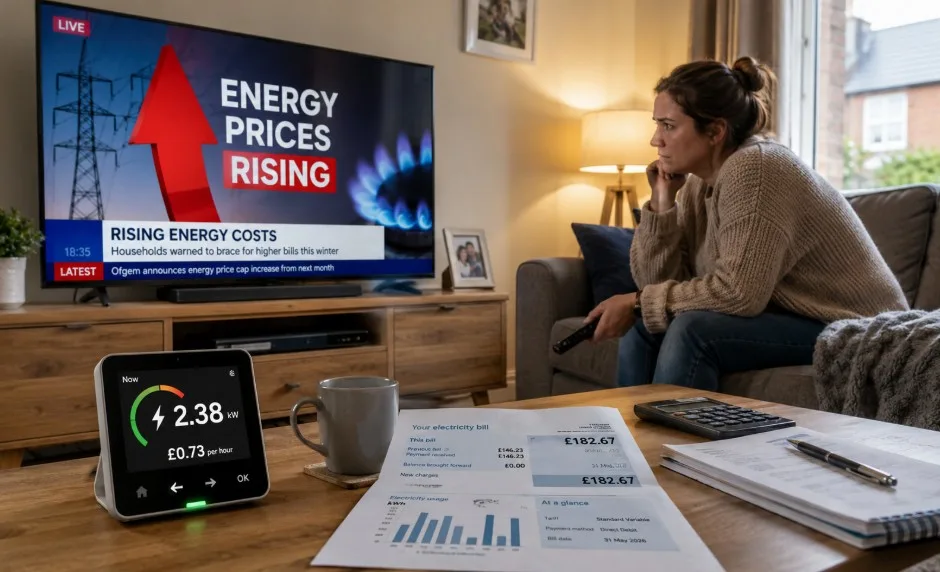
The UK TV electricity cost increase in 2026 is largely driven by higher electricity prices rather than televisions becoming less efficient.
For most households, the cost of running a TV remains relatively modest, but larger screens, longer viewing hours, gaming consoles, streaming devices, and rising energy tariffs can significantly increase annual expenses.
With Ofgem’s latest energy price cap changes affecting millions of households, understanding how much your television costs to run has become more important than ever.
Key points:
- Average UK households could spend around £42.89 per year running a television based on typical viewing habits.
- Electricity prices are rising due to higher wholesale energy costs and energy market pressures.
- Larger OLED and QLED televisions generally consume more power than smaller LED models.
- Connected devices such as games consoles and set-top boxes can increase total entertainment electricity costs.
- Simple energy-saving adjustments can help reduce TV running expenses.
Why Is the UK TV Electricity Cost Increase a Growing Concern Now?
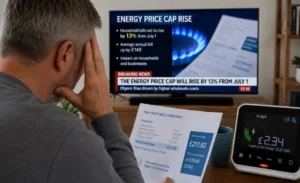
Many UK households are paying closer attention to appliance running costs following recent energy price increases. Ofgem’s revised energy price cap means households on variable tariffs face higher electricity costs, making everyday activities more expensive.
Ofgem confirmed the energy price cap will rise by 13% from 1 July for households in England, Scotland, and Wales, increasing annual bills for a typical household by around £221. Industry forecasts also suggest prices could remain volatile if wholesale markets stay under pressure.
Average annual energy bills are expected to reach around £1,862 for a typical household. Although televisions are not among the highest energy-consuming appliances, their frequent use makes them important when managing household costs.
“We understand many households will be concerned about rising energy prices and their impact on everyday living costs.” — Tim Jarvis, Ofgem Chief Executive
Televisions consume relatively low electricity compared with heating systems or ovens. However, combined with daily use and additional entertainment devices, yearly costs become more noticeable.
With household energy bills still around 79% higher than pre-energy crisis levels, many consumers are reviewing the running costs of everyday electrical devices, including televisions.
How Much Does It Cost to Run a TV in the UK in 2026?
The cost depends on three main factors: the TV’s power consumption, daily usage hours, and your electricity tariff. Using a common example of a television consuming around 100 watts and being used for 4.5 hours per day, the annual running cost is approximately £42.89.
Industry estimates suggest most UK televisions consume between 30W and 300W depending on screen size, display technology, and settings. On average, many households pay around 3p per hour to run a television, while larger premium models can cost more.
Estimated TV Running Costs
| Usage Time | Daily Cost | Monthly Cost | Annual Cost |
| 2 Hours | £0.05 | £1.52 | £18.25 |
| 4.5 Hours | £0.12 | £3.57 | £42.89 |
| 6 Hours | £0.16 | £4.80 | £57.60 |
| 8 Hours | £0.22 | £6.60 | £79.20 |
These figures are estimates and may vary depending on electricity prices and television specifications. Understanding your usage habits can help you better estimate your household costs.
How Much Electricity Does a TV Actually Use Every Day?
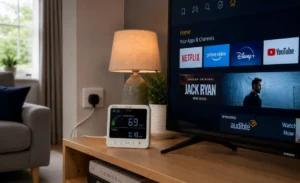
While many televisions consume between 40W and 200W during operation, industry data shows that overall usage can range from as little as 30W for smaller energy-efficient models to around 300W for large premium televisions operating at maximum brightness.
The actual amount depends on screen technology, display size, picture settings, and content being viewed.
Smaller bedroom televisions often sit at the lower end of the range, while premium large-screen models can consume substantially more electricity, particularly when displaying bright 4K content.
Does Watching More Than the UK Average Significantly Increase Your Electricity Bill?
Ofcom data indicates the average person in the UK watches approximately four and a half hours of television daily. However, viewing habits vary considerably between age groups and households.
A household where the television remains on for eight or more hours each day could see annual electricity costs almost double compared to average viewers. Families with multiple televisions operating simultaneously may also experience noticeably higher electricity consumption.
Typical Daily Viewing Scenarios
| Viewer Type | Daily Viewing | Estimated Annual Cost |
| Light Viewer | 1–2 Hours | £10–£20 |
| Average Viewer | 4–5 Hours | £40–£45 |
| Heavy Viewer | 8+ Hours | £70–£90 |
| Multiple TV Household | 10+ Combined Hours | £100+ |
Although televisions remain relatively efficient, prolonged use can gradually increase household energy expenditure.
Which Types of TVs Are the Most Expensive to Run?
Television technology plays a major role in determining electricity consumption. While manufacturers have improved efficiency in recent years, differences still exist between display types.
TV Technology Comparison:
| TV Type | Typical Power Usage | Running Cost Level |
| LED TV | Low | Lower |
| OLED TV | Medium | Moderate |
| QLED TV | Medium to High | Higher |
| Older LCD TV | High | Higher |
| Plasma TV | Very High | Highest |
QLED televisions often use more power due to their higher brightness levels, while OLED models can vary depending on displayed content. Older plasma screens remain among the most expensive televisions to operate.
When purchasing a new television, checking the energy label can provide valuable insight into future running costs.
“Energy efficiency should be a key consideration when consumers invest in a new television, particularly as electricity costs remain elevated.” — UK Consumer Energy Adviser
Television technology continues to improve, making newer models generally more efficient than older alternatives.
How Do TV Size and Viewing Habits Affect Electricity Costs?
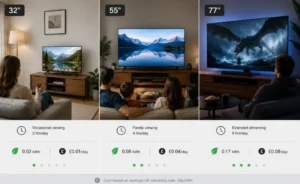
Screen size has a direct impact on electricity consumption because larger displays require more power to illuminate and process content.
A 32-inch television used occasionally in a bedroom will generally consume far less electricity than a 77-inch OLED television operating daily in a living room. Brightness settings can further influence consumption, especially when televisions are configured in vivid display modes.
Streaming services also contribute indirectly to energy usage because televisions work harder when displaying high-resolution content such as 4K films and live sports broadcasts. Households that regularly stream content throughout the day may therefore notice higher running costs compared with occasional viewers.
While larger televisions provide a better viewing experience, they typically carry higher electricity costs over their lifespan.
Are Additional Entertainment Devices Making Your TV More Expensive to Use?
Many consumers focus solely on television electricity usage while overlooking the devices connected to it. In reality, entertainment systems often consume considerably more power than the television alone.
Devices commonly contributing to additional electricity costs include:
- Games consoles
- Sky and Virgin TV boxes
- Streaming devices
- Soundbars
- Home cinema systems
- Broadband routers
How Much Extra Electricity Do Gaming Consoles and Set-Top Boxes Use?
Modern gaming consoles can consume significantly more electricity than televisions during active gameplay. Likewise, set-top boxes often remain powered continuously, drawing electricity even when not actively being used.
For households with a large television, a games console, streaming device and sound system, annual entertainment-related electricity costs can exceed £100 depending on usage patterns.
“Consumers often underestimate the cumulative energy impact of connected entertainment devices operating alongside their televisions.” — Independent Energy Efficiency Consultant
Understanding the full energy footprint of your entertainment setup can reveal additional opportunities for savings.
Can You Reduce Your TV Electricity Costs Without Cutting Back on Viewing?
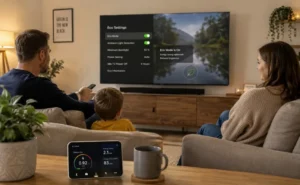
Reducing television-related electricity costs does not necessarily require watching less television. Small adjustments can make a measurable difference over time.
Practical Energy-Saving Measures:
- Enable Eco Mode where available.
- Reduce screen brightness levels.
- Turn off quick-start features.
- Switch off devices completely instead of leaving them on standby.
- Use sleep timers during evening viewing.
- Upgrade older inefficient televisions when replacement is necessary.
Many households find that combining several small changes produces noticeable annual savings. These adjustments can also extend the lifespan of electronic equipment while reducing overall household energy consumption.
As energy prices continue to fluctuate, proactive efficiency measures remain one of the most effective ways to control costs.
Is Watching TV Still Affordable Despite Rising UK Energy Prices?
Despite the UK TV electricity cost increase, television remains one of the more affordable forms of home entertainment.
Compared with appliances like tumble dryers, electric heaters, and ovens, TVs use relatively low amounts of electricity. Even after Ofgem’s latest 13% energy price cap increase, running a typical television remains cheaper than many household appliances.
However, households are paying more per unit of electricity than in previous years. Homes with multiple large-screen TVs, heavy streaming, or gaming setups may face higher costs.
By improving energy efficiency, monitoring usage, and choosing efficient devices, households can continue enjoying television affordably. Overall, TV remains a cost-effective entertainment option for most UK households in 2026
Conclusion
The UK TV electricity cost increase in 2026 reflects broader rises in household energy prices rather than a dramatic increase in television power consumption.
While most TVs remain relatively affordable to run, larger screens, longer viewing hours, and connected entertainment devices can raise overall costs.
By choosing energy-efficient models, adjusting settings, and reducing unnecessary power use, UK households can continue enjoying television while keeping electricity bills under better control.
FAQs About UK TV Electricity Cost Increase
How much does it cost to run a TV for one hour in the UK?
Most televisions cost between 2p and 6p per hour to run, depending on their size, power consumption, and electricity tariff.
How much does a TV cost to run for 5 hours a day?
A typical modern television used for five hours daily may cost approximately £45–£50 per year to operate.
Do smart TVs use more electricity than normal TVs?
Smart TVs can use slightly more electricity due to internet connectivity and background functions, although the difference is usually small.
Is an OLED TV expensive to run?
OLED televisions generally consume more electricity than basic LED models but remain significantly more efficient than older plasma screens.
Does 4K streaming use more electricity?
Yes. Displaying 4K content often requires more processing power and can slightly increase electricity consumption.
Should you turn your TV off at the plug?
Switching a TV off at the plug can eliminate standby power consumption and help reduce unnecessary electricity usage.
Does the TV Licence include electricity costs?
No. The TV Licence is a separate charge and does not cover any electricity used by your television.