

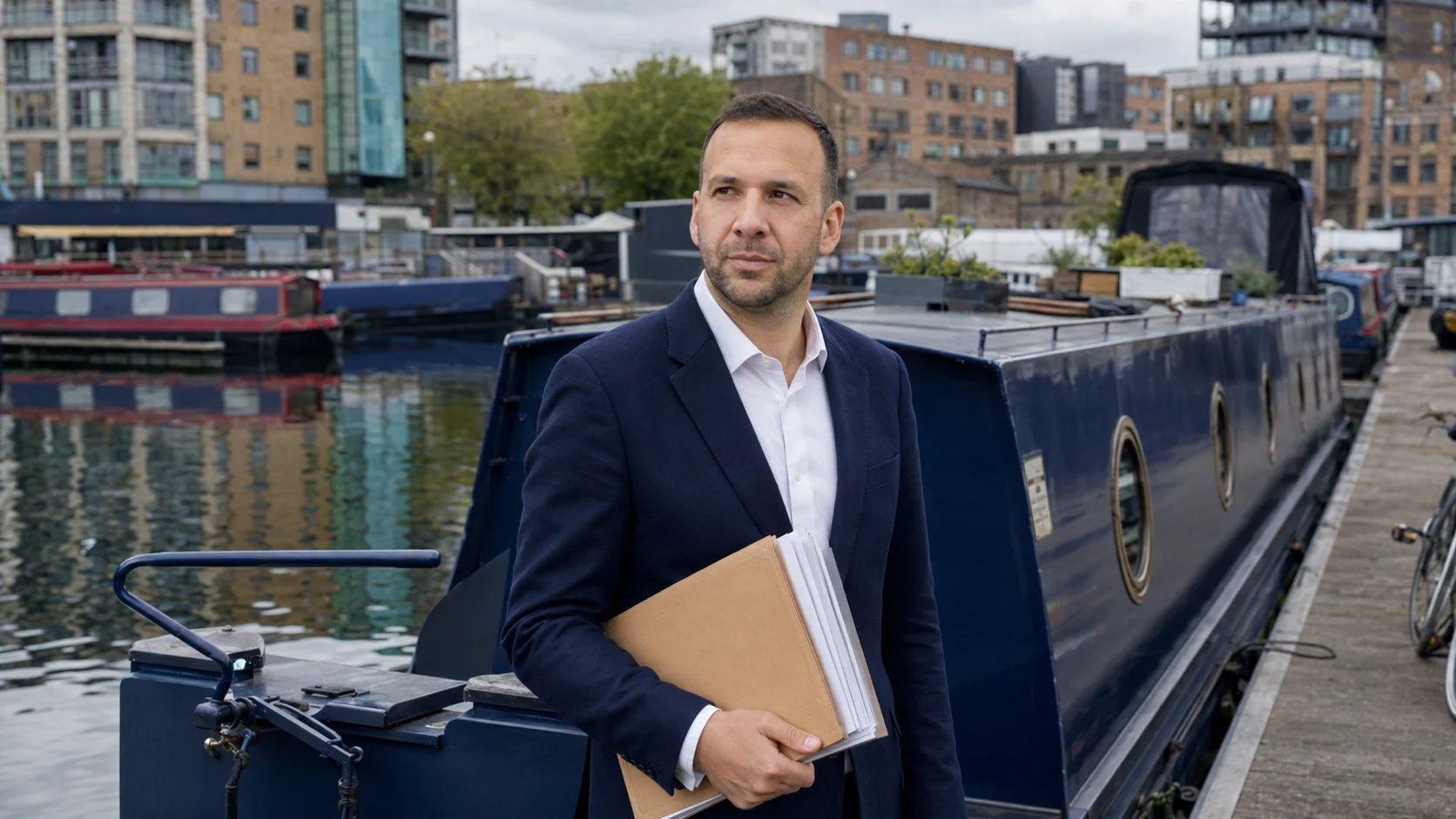
The Zack Polanski houseboat tax controversy has become one of the most discussed UK political stories in recent weeks.
The debate centres on whether the Green Party leader should have paid council tax on a London houseboat that he reportedly used as his main residence for several years.
Questions have also been raised about electoral registration, transparency, and whether the issue reflects broader concerns about political accountability.
Key highlights:
- Claims that the houseboat may have been Polanski’s primary residence
- Questions over unpaid council tax in Waltham Forest
- Electoral registration concerns linked to the marina address
- Calls from Labour and Conservatives for investigations
- The Green Party’s apology described the issue as an “unintentional mistake”
The story has attracted national attention because it combines tax law, political scrutiny, and public trust in elected officials.
Who Is Zack Polanski and Why Is He in the News?

Zack Polanski is a senior Green Party politician and a member of the London Assembly. He has become a well-known figure in the party as the Greens have gained more attention in local and national politics.
He is in the news because of the Zack Polanski houseboat tax issue. Reports claimed that Polanski and his partner lived on a narrowboat at Lee Valley Marina in east London for around three years, raising questions about whether council tax was paid.
The issue grew after a sales advert reportedly described the boat as their “amazing home”, which appeared to conflict with claims that he only stayed there occasionally. The Green Party later said Polanski had taken steps to pay any council tax he may owe.
“Zack apologises sincerely for the unintentional mistake,” a Green Party spokesperson said in a public statement.
The issue has since become a wider political debate about transparency, taxation, and standards in public office.
Why Is Zack Polanski Facing Questions Over Houseboat Council Tax?
At the centre of the controversy is a straightforward legal question: was the houseboat Polanski’s “sole or main residence”?
Under UK council tax rules, a permanently moored boat may become liable for council tax if it is used as someone’s primary home. Critics argue that available evidence suggests the boat was being used as a full-time residence and therefore should have been registered for council tax.
Reports referenced several factors that contributed to public scrutiny, including:
- The houseboat advertisement refers to the boat as an “amazing home”
- Electoral registration is linked to an address near the marina
- Claims that Polanski and his partner spent significant time there
- Reports from local sources suggest regular occupancy
The Green Party initially stated that Polanski only stayed on the boat occasionally and rented a room elsewhere in London, where council tax was included in the rent. However, critics questioned whether that explanation matched the publicly available evidence.
This distinction matters because UK law treats occasional stays differently from permanent residential use. If the boat was the primary residence, council tax obligations may have applied.
The controversy continues because Waltham Forest Council has not yet reached a final determination.
What Triggered the Zack Polanski Houseboat Tax Controversy?

The controversy escalated after national newspapers began investigating Polanski’s living arrangements and council tax status. A key turning point came when reports highlighted a sales listing for the narrowboat.
Why the Houseboat Advertisement Became Important?
The advertisement reportedly described the boat as:
“Our amazing home in the peace and quiet of Lee Valley Marina for three years.”
That wording became central to the debate because it appeared to indicate long-term residential use rather than occasional visits. Critics argued that describing the narrowboat as a home strengthened the case that council tax should have been paid.
The listing also included detailed descriptions of the property’s living features, including bedrooms, kitchen facilities, heating systems, and communal amenities at the marina.
Electoral Registration and Residential Status
Another issue involved voter registration. Reports stated that Polanski had been registered to vote using an address connected to the marina area in Waltham Forest.
Tax experts argued that if he genuinely only stayed there occasionally, questions could arise about electoral registration requirements.
Under UK law, voter registration generally depends on a person having a meaningful residential connection to an address.
The debate therefore developed into two separate issues:
| Issue | Main Question |
| Council tax | Was the boat the main residence? |
| Electoral registration | Was the declared voting address accurate? |
Although these issues are legally separate, they became closely linked in media coverage. The combination significantly increased political pressure on the Green Party leader.
Did Zack Polanski’s Houseboat Count as His Main Residence?
The phrase “sole or main residence” is central to the entire Zack Polanski houseboat tax debate. UK council tax rules do not automatically apply to every boat, but they can apply when a vessel functions as someone’s primary home.
Understanding the “Sole or Main Residence” Rule
Courts and councils usually assess several factors when deciding whether a property qualifies as a person’s main residence.
These may include:
- Where someone regularly sleeps
- Where personal belongings are kept
- Electoral registration details
- Delivery addresses for post and services
- Length of occupation
- How the property is described publicly
Tax lawyer Dan Neidle argued that many of these indicators appeared consistent with residential use.
A Waltham Forest Council spokesperson also confirmed that the situation involved “complex factors unique to moorings” and required further legal assessment.
Key Factors Being Discussed
| Factor | Why It Matters |
| Three years at marina | Suggests long-term occupation |
| Electoral registration | Indicates residential connection |
| “Amazing home” wording | Supports residential interpretation |
| Lodging elsewhere | Could complicate residency assessment |
Ultimately, councils evaluate the overall picture rather than relying on a single piece of evidence. That is why the issue remains under review rather than formally concluded.
The debate demonstrates how complex UK residency rules can become when alternative housing arrangements are involved.
How Does Council Tax Work for Houseboats in the UK?
Council tax rules for boats are more complicated than many people realise. In the UK, council tax is generally charged on domestic properties rather than individuals themselves.
A permanently moored boat can become liable for council tax if it meets the definition of a domestic dwelling and is used as someone’s sole or main residence.
The process often involves the Valuation Office Agency assessing whether the mooring and vessel should be placed into a council tax band. If approved, the local authority can then issue council tax bills.
The following table outlines how different situations are typically treated:
| Situation | Council Tax Likely? |
| Leisure boat used occasionally | Usually no |
| Permanently moored residential boat | Usually yes |
| Temporary recreational stays | Usually no |
| Main home at marina | Potentially yes |
This distinction explains why the Zack Polanski houseboat tax case has become so legally significant. The core issue is not simply boat ownership, but whether the boat functioned as a full-time residence.
The situation also highlights how alternative housing lifestyles sometimes fall into legal grey areas that councils must interpret carefully.
Why Are Mooring Fees Different from Council Tax?
One common misunderstanding in the debate involves the difference between mooring fees and council tax. Although both involve payments connected to living on a boat, they serve completely different purposes.
Mooring fees are payments made to marina operators or landowners for the right to keep a boat in a particular location. Council tax, by contrast, is a local government tax used to fund public services.
Key Differences Between Mooring Fees and Council Tax:
| Mooring Fees | Council Tax |
| Paid to marina operators | Paid to local councils |
| Covers berth usage | Funds public services |
| Private contractual payment | Legal tax obligation |
| May include facilities access | Linked to residential status |
Some reports noted that Polanski paid substantial mooring fees at Lee Valley Marina. However, critics argued that paying mooring charges does not remove separate council tax obligations if the boat qualifies as a main residence.
Understanding this distinction is important because many readers may incorrectly assume that marina charges replace council tax. In reality, both can apply simultaneously.
The issue demonstrates how non-traditional housing arrangements can create confusion around taxation rules.
What Have the Green Party and Zack Polanski Said About the Issue?
The Green Party initially defended Polanski by stating that he only stayed on the boat occasionally and rented a room elsewhere where council tax was already included.
However, following increased media scrutiny, the party later issued a more conciliatory statement acknowledging that Polanski had recently been living on the boat.
The Green Party’s Official Response
The party stated:
“Until relatively recently, Zack was living on a houseboat, which came with its own unique practical circumstances and considerations.”
The statement also confirmed that Polanski had taken steps to address any outstanding council tax issues.
Zack Polanski’s Public Apology
The apology became a major moment in the controversy because it marked a shift from earlier explanations.
“He has immediately taken steps to pay any council tax he may be found to owe,” the Green Party stated publicly.
The party also said that it would not publicly discuss Polanski’s address for security reasons, referencing reported incidents currently under police investigation.
While the apology may reduce some criticism, political opponents continue to argue that the issue raises broader concerns about honesty and accountability.
Could Zack Polanski Face Backdated Council Tax Payments?
Zack Polanski could face backdated council tax payments if Waltham Forest Council decides the houseboat counted as his main residence. In that case, the council may assess whether tax should have been paid for the period he lived there.
Reports suggest the boat could fall into a lower council tax band, possibly Band A, which may still create a bill worth several thousand pounds over three years. However, this does not automatically mean criminal wrongdoing.
Tax experts have suggested the matter may be administrative rather than criminal. Dan Neidle has said there is no clear evidence of intentional tax evasion. For now, the council is still reviewing the issue, and no final legal decision has been announced.
Why Are Labour and Conservative Politicians Demanding Investigations?

Labour and Conservative politicians are demanding investigations because they believe the Zack Polanski houseboat tax issue raises questions about transparency, public trust, and whether elected representatives have followed the rules. The matter has become more political because Polanski is a senior Green Party figure.
Main Political Concerns:
- Labour figures have called for checks into council tax declarations and public office rules.
- Conservative politicians have questioned whether Polanski met the standards expected of elected representatives.
- Critics say the issue raises concerns about accountability and openness.
- Some have linked the case to the Nolan Principles of public life.
- Opponents argue there may be inconsistencies in public statements.
The controversy is sensitive because the Green Party has recently gained more political attention. For rival parties, the issue has become a way to question the Greens’ credibility on fairness, taxation, and public standards.
How Could the Houseboat Tax Debate Affect Public Trust in Politicians?
Political controversies involving taxes often attract strong public attention because they relate directly to fairness and accountability.
Many voters expect politicians to follow the same rules they advocate publicly. Even relatively small tax disputes can therefore become symbolically important.
The Zack Polanski houseboat tax debate has generated wider discussion about:
- Transparency in public office
- Standards for elected representatives
- Alternative housing and taxation rules
- Public confidence in political institutions
The story also reflects the growing media focus on politicians’ personal conduct and financial arrangements.
For the Green Party, the issue arrives during a period of rising electoral visibility. As smaller parties become more politically influential, their leaders face the same intense scrutiny traditionally directed at Labour and Conservative politicians.
Regardless of the final council decision, the controversy has already become a case study in how modern political narratives can quickly escalate through media coverage and public debate.
What Does the Zack Polanski Houseboat Tax Debate Reveal About UK Tax Rules?
The Zack Polanski houseboat tax debate shows how complex UK council tax rules can become when non-traditional homes are involved. Houseboats sit between property, transport, and residential accommodation, which can create uncertainty for both councils and residents.
The case also highlights that tax obligations often depend on how a place is actually used, not just how it is described. If a boat functions as someone’s main home, council tax questions may arise.
More broadly, the issue raises concerns about how councils define residential use, whether current rules are clear enough, and how public figures should handle transparency. While Waltham Forest Council continues its assessment, the debate remains both a legal and political issue
Conclusion
The Zack Polanski houseboat tax debate has developed into more than a simple council tax dispute. It has raised wider questions about political accountability, transparency, and how UK tax laws apply to alternative living arrangements such as houseboats.
While Waltham Forest Council continues assessing the situation, the controversy highlights the importance of clearly defining a “sole or main residence” under council tax rules.
For politicians especially, public trust often depends not only on legal compliance but also on openness and consistency when responding to scrutiny.
FAQs About Zack Polanski Houseboat Tax
Can a narrowboat legally be used as a permanent home in Britain?
Yes, many people live permanently on narrowboats in the UK, although local planning rules and marina agreements may vary.
Which authority decides whether council tax is owed on a boat?
The local council and the Valuation Office Agency usually determine whether a boat should be treated as a taxable dwelling.
Is council tax automatically charged on every houseboat?
No. Council tax generally only applies if the boat is considered someone’s sole or main residence.
What happens if a property has never been registered for council tax?
A council may retrospectively register the property and issue backdated bills if it determines tax should have been paid.
Can someone be registered to vote at a marina address?
Potentially yes, if the person genuinely resides there and meets electoral registration requirements.
Are there legal grey areas around residential moorings in London?
Yes. Residential boat living can involve complex overlaps between planning law, marina contracts, and council tax regulations.
Why has the Zack Polanski story received national media attention?
The controversy combines politics, taxation, electoral law, and questions about public accountability, making it highly newsworthy.